

What is the Working Principle of Jaw Crusher?
Working Principle of Jaw Crusher
Jaw crusher is the most widely used primary crushing equipment in mining, building materials, infrastructure, sand and aggregate processing industries. Featuring simple structure, sturdy durability, powerful crushing force and stable operation, it serves as the core machine for the first-stage crushing of bulk materials such as ores, rocks and construction waste. Many users pay close attention to the working principle of jaw crusher during model selection, production commissioning and equipment maintenance. Mastering its operation logic helps users fully grasp equipment performance, boost production efficiency and reduce failure rates.
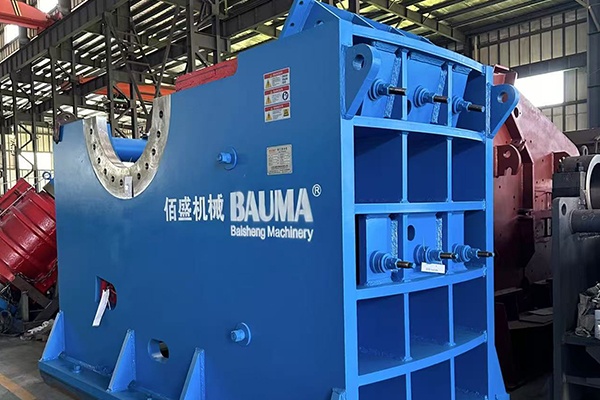
Jaw crusher adopts the swing extrusion crushing principle, inspired by the chewing movement of animal jaws. It relies on the periodic opening and closing motion of two jaw plates to exert multiple forces including extrusion, splitting, grinding and impact on materials, so as to crush hard substances. This is also its core feature distinguishing it from impact crushers and cone crushers.
Driven by an electric motor, the transmission system rotates the eccentric shaft and drives the movable jaw plate to perform regular reciprocating swing, forming a dynamic crushing chamber together with the fixed jaw plate. After materials enter the crushing chamber, they get crushed under compression when the movable jaw draws near the fixed jaw; when the movable jaw moves away from the fixed jaw, qualified crushed materials are discharged by gravity. The cycle repeats to realize continuous automatic crushing operation.
In short, the working principle of jaw crusher can be summarized as follows: the motor drives the movable jaw to swing back and forth, and crushes bulk materials through periodic extrusion and splitting, followed by automatic discharge of finished products. Its bionic chewing swing extrusion crushing method balances crushing strength, operation stability and working efficiency, which is the key reason why it has become the mainstream primary crushing machine in industry. An in-depth understanding of its working principle enables users to select models scientifically, operate equipment standardly, effectively extend service life, and improve the overall operating efficiency of the whole crushing production line.