The regeneration of activated carbon is essential for metallurgical and water treatment systems. In gold mining processes, such as carbon-in-pulp, tank leaching, and heap leaching, activated carbon becomes contaminated by organic substances during the adsorption of gold. Even after desorption, these contaminants may remain on the carbon or infiltrate its micropores, diminishing its ability to adsorb gold. Therefore, reactivation and regeneration are necessary to restore its activity.
Activated carbon to be regenerated is fed into the furnace through a hopper, forming a moving carbon bed inside the furnace. The quantity of carbon processed is controlled by a discharge device. The residence time of the activated carbon in the furnace typically ranges from 15 to 25 minutes, depending on its moisture content. An electric current is supplied through a wiring panel, generating heat within the flowing carbon layer to achieve drying, activation, and carbonization. A temperature control circuit, comprising temperature sensors and controllers, maintains the optimal regeneration temperature between 700℃ and 850℃. The moisture carried by the activated carbon forms high-temperature steam at this temperature, which continuously flows over the heated carbon surface, facilitating the regeneration process. The ideal moisture content for the regenerated activated carbon is about 5%.
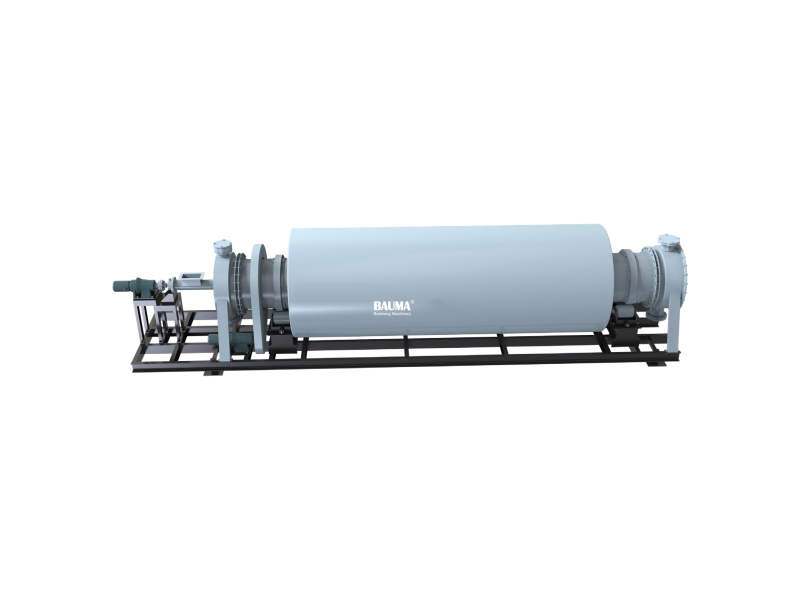
| Model | Maximum Processing Capacity (kg/d) | Heating Power (kW) | Insulation Power (kW) | Drum Rotation Speed (r/min) | Drum Rotation Speed (mm) | Power (kW) |
| ZSL-1000 | 1000 | 110 | 65 | 0.5-3 | 7792×1795×1700 | 1.5+0.75 |
| ZSL-2000 | 2000 | 180 | 100 | 0.5-3 | 8785×1900×1995 | 2.2+1.1 |
| ZSL-3000 | 3000 | 240 | 200 | 0.5-3 | 10200×1900×1995 | 2.2+1.1 |
| ZSL-4000 | 4000 | 240 | 200 | 0.5-3 | 10200×1900×1995 | 2.2+1.1 |
| ZSL-5000 | 5000 | 280 | 200 | 0.5-3 | 11411×1900×2022 | 3+1.1 |

Whatsapp: +86-13775267826
E-mail: baisheng@bscrusher.com
ADD: No.6 Xingye Road, Tianmuhu Industrial Park, Liyang city, Jiangsu Province, China